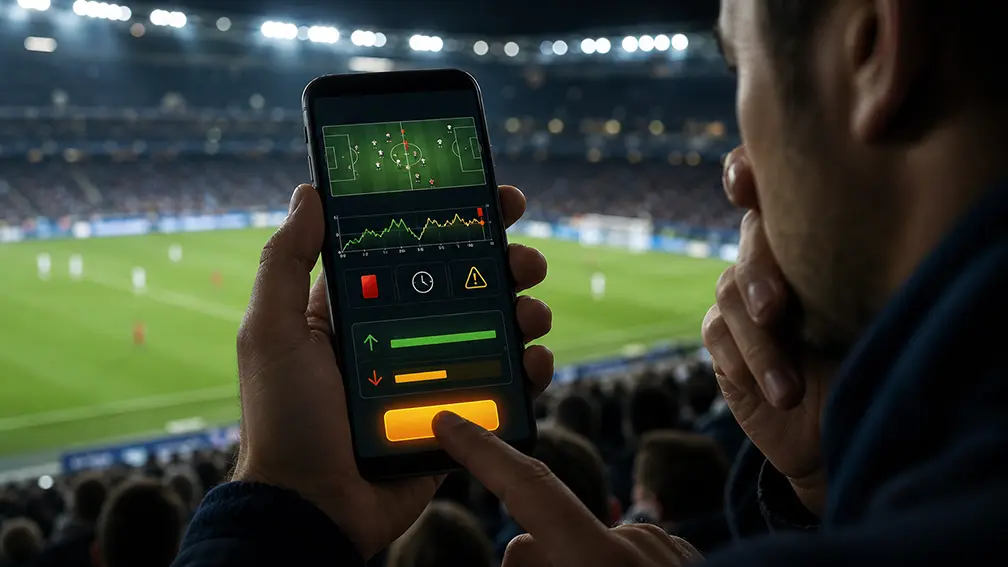
A cash out button looks calm when a lead feels fragile. The price often tells a harsher story. A £10 bet at 3.00 has a £30 return if it wins, but an in-play offer usually reflects current odds, suspension risk, delay, and margin. Treat the figure as a fresh quote, not protection. Judge score, time left, red cards, momentum, and your loss limit before taking it.

James Whitmore is Editor-in-chief at BookiesReviews.co.uk, where he leads bookmaker reviews, betting guides and UK sports betting coverage. James is a football, horse racing and boxing fan, a Burnley supporter, and follows the NFL through the Green Bay Packers.His industry experience includes roles with Betfair, Paddy Power and Oddschecker, giving him practical knowledge of bookmakers, odds comparison and player-focused betting content.
What cash out means in live football betting
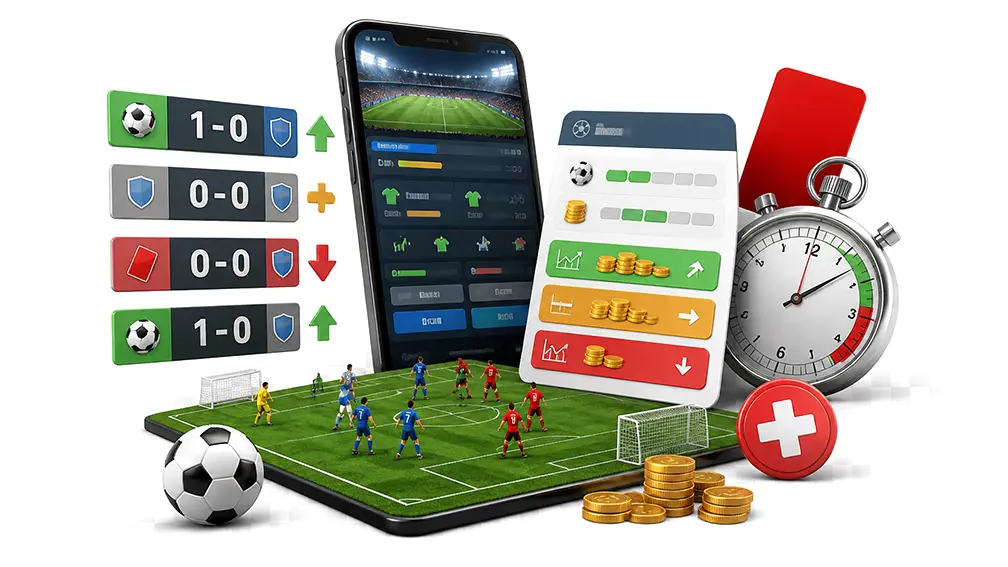
Cash out is an early settlement offer before the final whistle. During football live betting, the figure moves after goals, cards, injuries, time decay, and odds suspensions. You accept the displayed amount, then the original bet ends. That choice might cut a loss or secure part of a lead, but it is not a full win. The price still carries margin, so value often leaves with the offer.
| Cash out situation | Example stake | Possible offer | What the bettor gives up |
|---|---|---|---|
| Team leads 1-0 | £10 | £18 | Full £30 return |
| Score stays 0-0 | £10 | £6 | Recovery if late goal lands |
| Red card hurts pick | £10 | £3 | Original odds upside |
| Favourite scores early | £10 | £14 | Remaining match value |
How cash out does work before a football bet settles
After placement, the slip holds its original odds until the result or an early settlement. During play, the book price keeps changing through score, clock, cards, substitutions, pressure, and liquidity. The displayed figure uses in-play odds calculation, then applies margin before you see it. A goal, VAR check, penalty, corner sequence, or red card often suspends markets. During that pause, no settlement might complete. After you press accept, a short delay still applies. The number shown before confirmation might drop, rise, or disappear.
| Stage | What changes | Effect on cash out |
|---|---|---|
| Bet placed | Original odds set | Baseline return created |
| Match starts | Time reduces uncertainty | Offer moves from opening price |
| Major event | Goal, card, penalty, injury | Market suspends or reprices |
| Acceptance clicked | Delay checks latest price | Amount might change before approval |
| Settlement confirmed | Original slip closes | New amount replaces possible final return |
Full cash out compared with partial cash out
Full settlement closes the whole slip. You take the quoted amount, then no further result matters. A split settlement closes only part of the position. Partial cash out suits a bettor who wants stake recovery while leaving some upside alive. The trade-off stays clear. Less exposure means less final return if the original selection still wins.
| Option | Percentage closed | Example return on £20 stake | Remaining exposure |
|---|---|---|---|
| Full settlement | 100% | £32 paid now | None |
| Half settlement | 50% | £16 paid now | £10 stake still runs |
| Stake cover | About 60% | £20 paid now | Reduced profit chance |
| Small trim | 25% | £8 paid now | Most upside remains |
Auto cash out and why the trigger price matters
Auto settlement uses a target amount set before another event changes the market. It sounds precise, yet execution depends on live price, market status, and confirmation delay. A trigger does not guarantee payment. A goal, VAR review, red card, or live betting market suspension might block the instruction before it completes. Set the target too close to a moving quote and the order often fails.
| Target offer | Market condition | Execution risk | Likely result |
|---|---|---|---|
| £25 | Stable possession phase | Low | Trigger more likely accepted |
| £25 | Attack near goal | High | Price changes before approval |
| £25 | VAR check | High | Market pauses |
| £25 | Goal scored | High | Quote removed or recalculated |
Why cash out can reduce betting value
Cash out reduces value when the offer sits below the fair price of your open position. You trade the original return for certainty, lower variance, or comfort after a tense spell. That choice has a cost. A bet with a £30 possible return might receive £18 while the fair live price supports £20. Expected value betting treats that £2 gap as the price of exiting early, not a bonus. Sometimes the exit still fits your risk limit. It is weaker when fear, noise, or one dangerous attack drives the decision.
An Expert does not guarantee profits, is not a financial advisor, and is not exempt from bankroll management principles.
Olivier Degryck, CEO and Founder of Bet2invest, sports betting market and tipster performance specialist
Bookmaker margin inside the cash out price
A cash out quote usually includes margin, like normal odds. If a fair hedge values your position at £20, the displayed number might show £18.50. That difference is bookmaker overround inside an early exit. The gap looks small on one slip, but repeated early exits add cost across a season.
| Bet state | Fair value | Cash out offer | Value lost |
|---|---|---|---|
| Favourite leads after 20 minutes | £17.00 | £15.80 | £1.20 |
| Draw selection reaches half-time | £22.00 | £20.40 | £1.60 |
| Accumulator has one leg left | £48.00 | £44.50 | £3.50 |
| Underdog scores first | £31.00 | £28.80 | £2.20 |
Expected value and why early exit can cost you
Expected value measures the average return after chance and price meet. Say your £10 bet now has a 50% live chance. Fair odds are 2.00, so the position is worth £15 on a £30 return. If the offer shows £13, you sacrifice £2. Closing line value also matters because a good original price deserves stronger protection.
| Live chance | Fair odds | Fair value on £10 stake | Offered cash out |
|---|---|---|---|
| 40% | 2.50 | £12.00 | £10.80 |
| 50% | 2.00 | £15.00 | £13.00 |
| 60% | 1.67 | £18.00 | £16.50 |
| 70% | 1.43 | £21.00 | £19.20 |
Why a cash out offer can be lower than fair market value
The displayed figure often trails a cleaner market hedge because the sportsbook protects itself during fast football phases. A betting exchange lay off gives a useful comparison, since it shows what another trader might accept without the same retail margin.
- Overround adds cost, such as £18 offered when fair value sits near £19.50.
- Low liquidity hurts price depth, especially on corners, cards, and player props.
- Delay changes value, so one attack near goal cuts the quote before approval.
- Suspensions block exits during VAR, penalties, goals, and red-card checks.
- Risk controls widen gaps when an acca has one short-priced leg left.
How cash out is calculated in football betting
A cash out quote starts with your stake and possible return, then reacts to the live market. Operators weigh the current price, implied chance, match clock, score, red cards, liquidity, and internal margin. No single public formula fits every bookmaker, so treat the number as a fresh offer, not a neutral valuation. Cash out offer calculation also changes during delay, which matters when a counterattack, VAR review, or penalty arrives before approval.
| Factor | Example | Effect on offer |
|---|---|---|
| Original stake | £10 placed | Sets base position size |
| Original odds | 3.00 taken pre-match | Creates £30 possible return |
| Current price | Selection now 1.80 | Raises quote if chance improves |
| Market probability | Team judged near 56% | Shapes fair value estimate |
| Time left | 15 minutes remaining | Reduces uncertainty after a lead |
| Bookmaker margin | Offer cut by £1.50 | Lowers exit value |
Original stake, current odds and potential return
Stake and odds set the size before anything happens. A £10 pick at 4.00 carries £40 upside, so live movement creates larger swings. A £10 selection at 1.50 returns £15, leaving less room for cash out betting value after small price shifts.
| Stake | Original odds | Potential return | Live cash out sensitivity |
|---|---|---|---|
| £10 | 1.50 | £15 | Low movement unless risk changes sharply |
| £10 | 2.00 | £20 | Moderate shift after goals or cards |
| £10 | 4.00 | £40 | Large swing when underdog leads |
| £20 | 3.00 | £60 | Bigger stake makes each price move matter |
Live market price suspensions and repriced bets
Cash out often disappears when the match enters a high-risk phase. A dangerous attack, penalty check, red card, goal, or VAR betting impact forces a pause. After reopening, the new figure might sit far above or below the old number.
| Event | Typical suspension length in seconds | Repricing direction | Risk to bettor |
|---|---|---|---|
| Dangerous attack | 5 to 20 | Small or sharp move | Offer changes before click |
| Penalty awarded | 30 to 90 | Major move | Old price removed |
| VAR review | 60 to 180 | Unstable | Quote returns lower or higher |
| Red card | 30 to 120 | Team strength reset | Market reopens at worse terms |
| Goal scored | 20 to 90 | Immediate reset | Exit no longer available at prior amount |
Simple cash out example for a £10 football bet
Take a £10 bet at 3.00 on a home win. Potential return equals £30. After 70 minutes, the home side leads 1-0 and trades near 1.60. A fair estimate values the position around £18.75, before margin. If the operator offers £17.20, bookmaker cash out margin costs £1.55 versus that estimate.
| Item | Figure | Meaning | Value effect |
|---|---|---|---|
| Stake | £10 | Amount risked | Base cost |
| Original odds | 3.00 | Pre-match price | £30 possible return |
| Current live odds | 1.60 | Shorter after lead | Position improved |
| Fair estimate | £18.75 | Approximate live value | Reference point |
| Displayed offer | £17.20 | Early settlement quote | £1.55 below estimate |
Cash Out Value Checker
Use this tool to check whether a cash out offer looks fair against a simple live value estimate. It helps you compare your stake, original odds, possible return, current live chance, and the bookmaker offer before you accept an early settlement.
Result
| Possible return if the bet wins | £0.00 |
|---|---|
| Estimated fair live value | £0.00 |
| Cash out offer | £0.00 |
| Value gap | £0.00 |
| Offer as share of fair value | 0% |
| Tool verdict | Enter your figures. |
How this checker works
This tool estimates whether a cash out offer sits above or below a simple fair value figure. It does not predict the final result. It does not guarantee profit. It gives you a structured way to judge the price before you press the cash out button.
The calculation starts with your stake and original odds. It then calculates the full possible return. Next, it applies your estimated live chance to that possible return. The result is a fair live value estimate. The tool compares that estimate with the bookmaker cash out offer and shows the difference in pounds and percentage terms.
Example: a £10 bet at 3.00 has a possible return of £30. If you estimate the live chance at 62.5%, the fair value is £18.75. If the bookmaker offers £17.20, the offer is £1.55 below the estimate. That gap is the cost of taking certainty early.
How to use this checker
- Enter your original stake in pounds.
- Enter the odds taken when you placed the football bet.
- Estimate the current live chance of your selection winning. Use the score, time left, red cards, injuries, xG, shots on target, corners, and match pressure.
- Enter the cash out amount shown by your bookmaker.
- Add your minimum acceptable offer if you set one before kick-off. This step is optional, but it helps with betting discipline.
- Press Check cash out value.
- Read the fair value estimate, value gap, and verdict.
- Reject the offer when the gap looks too large and your original staking plan still makes sense.
- Consider taking the offer only when new match information changes the bet, your risk limit has been reached, or the amount matches your pre-set exit rule.
- Record the offer, live odds, final result, and your decision after the match. Review at least 20 decisions before changing your cash out approach.
What the verdict means
Strong offer means the cash out amount is close to, or above, the estimated fair value. Borderline offer means the price gap is small, so your decision should depend on risk, time left, and match state. Weak offer means the bookmaker amount sits well below your fair value estimate. In that case, you give up value for certainty.
The tool works best when your live chance estimate is realistic. Avoid changing the percentage after one attack, one corner, or one loud passage of play. Cash out should be a priced decision, not an emotional reaction.
Match factors that influence cash out offers
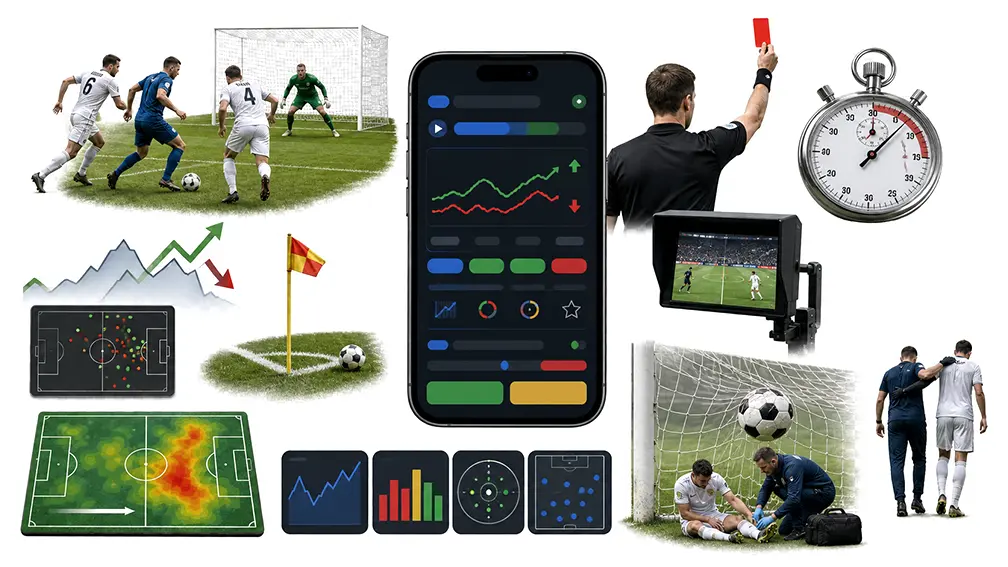
A cash out price moves because a football match keeps changing the chance of settlement. Time decay helps a leading side. Scoreline changes reshape every main market. Team strength shifts after injuries, substitutions, and cards. Pressure, territory, and liquidity also affect the quote. Match state analysis matters most when the figure looks tempting after one tense attack.
Stats Perform will also serve as an official distributor of live FIFA match streams to customers of licensed sports betting operators in selected territories.
Romy Gai, Chief Business Officer at FIFA and senior football commercial executive
Goals red cards and injury time risk
Goals reset match result prices at once. Red cards change team strength, tempo, and late pressure. Injury time adds minutes when a bettor expects closure. These events hit match result, both teams to score, total goals betting, and handicap lines. A 1-0 lead at 88 minutes looks safe until six added minutes and one set piece alter the exit price.
| Event | Minute example | Affected market | Likely price movement |
|---|---|---|---|
| Opening goal | 18 | Match result | Scoring side shortens |
| Equaliser | 63 | Both teams to score | BTTS settles, result resets |
| Red card | 70 | Handicap | Reduced side drifts |
| Late goal | 89 | Totals | Overs shorten sharply |
| Added time | 90+6 | Correct score | Leader faces extra risk |
Momentum pressure and football betting stats
Pressure data helps when the score hides the match rhythm. Shots on target, corners, territory, xG, and second-half attacks give context before accepting a quote. They should support price comparison, not replace it. Football match momentum matters when one side keeps arriving in the box while the market still offers an exit near fair value.
| Live stat name | Example value | What it may signal | Cash out caution |
|---|---|---|---|
| Shots on target | 6-1 | One side creates cleaner chances | Check shot quality, not count alone |
| Corners | 8-2 | Sustained wide pressure | Corners do not equal goals |
| Territory | 64% | Control in attacking half | Possession lacks value without chances |
| xG | 1.9-0.4 | Chance quality gap | Models vary by provider |
| Second-half shots | 5 in 12 minutes | Rising tempo after break | Prices often move first |
| Box entries | 14-3 | Pressure near goal | Final pass still matters |
VAR delays market suspension and price volatility
VAR pauses create uncertainty because the next ruling might confirm a goal, cancel it, award a penalty, or produce a card. During review, cash out often disappears. After confirmation, odds volatility increases because the market must rebuild around the new state. Do not chase the old number after a screen delay.
| VAR event | Suspension risk | Possible price swing | Bettor action |
|---|---|---|---|
| Goal check | High | Result price flips fast | Wait for confirmation |
| Penalty review | High | Totals and result shorten | Avoid stale quote |
| Red-card review | Medium | Team strength repriced | Recheck market depth |
| Offside check | High | Goal removed or confirmed | Accept only final figure |
When cash out can make sense during in play football betting
Early settlement has a place when fresh information changes the bet, not when nerves take over. A striker injury, red card, tactical switch, or poor second-half pressure might make the original price less useful. It also helps when an accumulator leaves one risky leg, or a stake no longer fits your limit. Partial exit works better than closing everything when you still like part of the position.
| Scenario | Why cash out helps | Value risk | Better alternative |
|---|---|---|---|
| Key player injury | New team weakness changes outlook | Offer already adjusted | Compare live price first |
| Red card against pick | Limits further damage | Quote drops fast | Wait for stable market |
| Accumulator final leg | Reduces one-result exposure | Large margin on accas | Use a measured hedge |
| Stake feels too large | Brings risk under control | Poor timing costs value | Set smaller stakes earlier |
| Partial exit | Recovers part of stake | Lower final upside | Keep planned exposure only |
When letting bets run can offer better value
Refusing cash out often makes sense when the market still supports your bet. A strong pre-match price, calm match state, short time left, or weak exit quote all point towards patience. Closing line value matters because a better early price gives you a cushion against later movement. Discipline means judging the offer against fair value, not against one stressful attack.
| Signal | What to check | Why value remains | Cash out warning |
|---|---|---|---|
| Stable final spell | Score, possession, stoppage risk | Less time for reversal | Offer might underpay safety |
| Strong opening price | Price taken versus current market | Early edge still holds | Do not sell cheap |
| Low liquidity market | Cards, corners, player props | Quote often has wider margin | Exit price might lag |
| Goal expectancy unchanged | Shots, xG, tempo | Original view still fits | Ignore one noisy passage |
| Small cash out gap | Fair value versus offer | Running keeps upside alive | Reject poor value if risk fits limit |
Cash out mistakes to avoid in football betting

Poor exits usually start with emotion. One corner, one blocked shot, or one noisy crowd spell should not decide the slip. Treat the offer as a priced trade, not insurance. Accumulators need extra care because each leg adds margin. Player markets also need rule checks, especially when asking do own goals count in betting before settlement.
| Mistake | Example | Warning sign | Better decision |
|---|---|---|---|
| Reacting to one attack | Exit after a single corner | No price comparison | Check live odds first |
| Treating exit as cover | Assuming protection | Offer below fair value | Accept only planned loss control |
| Cashing every acca | Closing final leg early | Habit beats maths | Compare hedge cost |
| Ignoring market state | Taking quote during pressure | Suspension likely | Wait for stable play |
| Believing no-loss claims | Following system tips | Profit promised | Reject guaranteed-result talk |
| Missing totals risk | Leaving after 70 minutes | Late goal threat ignored | Review tempo and xG |
| Overlooking rules | Player scorer confusion | Own goal unclear | Read settlement terms |
Practical cash out rules for live football betting

Good cash out use starts before kick-off. Write down your exit price, then stick to it when the match gets loud. Compare the offer with live odds. Name the events that change the bet: red card, striker injury, formation switch, or six added minutes. Treat stats as evidence, not a siren. A profit lock in only helps when the number still pays fairly.
| Rule number | Rule | Figure to record | Action | Reason |
|---|---|---|---|---|
| 1 | Price the exit | Offer versus live odds | Decline a weak gap | Protects value |
| 2 | Set triggers early | Goal, card, injury, time | Act on listed events only | Cuts panic clicks |
| 3 | Pick a floor | Minimum £ return | Take nothing below it | Stops cheap surrender |
| 4 | Stake smaller | Stake as bankroll share | Lower pressure before kick-off | Prevents forced exits |
| 5 | Use match data | Shots, xG, corners, territory | Check pattern, not one attack | Filters noise |
| 6 | Keep a log | Offer, odds, final result | Review after 20 slips | Shows costly habits |
Safer gambling and bankroll control for cash out decisions
Cash out is not a safety net. It is another priced decision inside a live market. Bankroll protection starts with stake size, loss limits, and a stop point before kick-off. Stress, anger, or chasing losses turns the button into a leak. If live football stops feeling controlled, leave the market. Betting rules for football players also matter, as regulated sport bars prohibited participation.
- Deposit limit: Set a fixed weekly amount before the first bet.
- Loss limit: Stop when the preset loss figure is reached.
- Reality check: Use alerts to track time spent in-play.
- Time-out: Pause betting after emotional cash out decisions.
- Self-exclusion: Use it when control breaks or stress grows.
FAQs about cash out in live football betting
Is Cash Out always available in live football betting?
No. The button often disappears during goals, VAR checks, penalties, red cards, dangerous attacks, or market faults. It returns only when the operator reopens the price.
Can I Cash Out on all types of bets in live football betting?
No. Availability depends on bookmaker rules, market type, match status, and bet format. Player props, corners, cards, specials, and some bet builders often have tighter limits.
Do I need to pay a fee to Cash Out in live football betting?
Usually no separate fee appears. The cost normally sits inside the offer because the quote reflects margin and current risk.
What happens if I don't Cash Out in live football betting?
Your original bet keeps running until settlement. It wins, loses, voids, or returns part of the stake under the market rules.
What does cash out mean?
It means early settlement. You accept a displayed amount before the final result, then the original slip closes.
Why do offers change so quickly?
Football prices react to time, score, cards, injuries, pressure, substitutions, liquidity, and delay. One attack changes the number before confirmation.
Is partial cash out better?
Sometimes. It lets you close part of the stake while keeping some exposure, but it still carries a price cost.
Does cash out reduce value?
It often does when the offer sits below fair live value. The trade gives certainty, not a better price.
Does it work well for accumulators?
It helps control final-leg risk, but acca offers often include wider margin. Compare the live price before accepting.
Should beginners use cash out?
New bettors should set limits before kick-off, record every exit, and avoid panic clicks after one noisy passage.