
At UK betting sites, the withdrawal process matters more than the payment label. A debit card withdrawal and a crypto payout start after account approval, payment ownership checks, KYC review, and release from the bookmaker payout queue. Card funds then move through banking rails. Coin transfers depend on network settlement, wallet accuracy, and operator rules after approval.

James Whitmore is Editor-in-chief at BookiesReviews.co.uk, where he leads bookmaker reviews, betting guides and UK sports betting coverage. James is a football, horse racing and boxing fan, a Burnley supporter, and follows the NFL through the Green Bay Packers.His industry experience includes roles with Betfair, Paddy Power and Oddschecker, giving him practical knowledge of bookmakers, odds comparison and player-focused betting content.
Quick comparison of card withdrawals and crypto payouts
Debit cards suit UK players who want GBP returned to a familiar bank account. Crypto betting sites UK suit experienced players who understand wallet addresses, exchange withdrawals, network fees, and blockchain settlement speed. Both routes depend on account approval first, not the click on withdraw.
| Factor | Debit card route | Crypto route |
|---|---|---|
| Approval flow | KYC, card ownership, pending review | KYC, wallet check, pending review |
| Settlement route | Bookmaker to card issuer | Bookmaker wallet to player wallet |
| Currency | GBP | Coin or token |
| Fees | Usually operator or bank controlled | Network and exchange costs |
| Reversal risk | Banking route has dispute controls | Transfers are final |
| User error | Wrong card details are rare | Wrong address risks loss |
| Off-ramp | Direct bank access | Exchange sale needed |
How we compare payment methods after KYC
A fair payment review starts after verification, not at advertised deposit speed. The same operator payment policy should cover approval, pending time, cost, security, limits, dispute handling, and safer gambling controls. Card routes look simpler because GBP returns to a bank-linked account. Coin routes need wallet control, chain choice, and later conversion.
| Assessment factor | Card evidence | Crypto evidence | Numeric marker |
|---|---|---|---|
| KYC timing | Profile checked before play | Documents still possible before release | 1 profile |
| Ownership | Name on card matched | Wallet risk reviewed | 1 payment route |
| Speed | Issuer processing follows approval | Chain confirms after release | 2 stages |
| Cost | GBP route reduces conversion | Network plus exchange cost | 2 fee points |
| Limits | Operator and bank caps apply | Operator and chain rules apply | 2 limit types |
| Security | Bank controls support checks | Final transfer needs accuracy | 1 address |
| Protection | UK tools usually stronger | Offshore controls vary | 6 tool checks |
Verified KYC requirements
KYC sits before any payout comparison because an account must pass checks before money leaves. UK-licensed operators need age and identity checks before gambling. They also need extra information when legal duties require it. Offshore brands taking coins still request documents before releasing funds, especially after larger wins, unusual activity, or payment mismatch signals.
| Check | Usual document | Card relevance | Crypto relevance |
|---|---|---|---|
| Age | Passport or licence | Needed before play | Needed where requested |
| Identity | Photo ID | Supports card match | Supports identity document approval |
| Address | Bill or statement | Matches bank profile | Confirms location risk |
| Payment ownership | Card image or statement | Proves cardholder link | Less direct with wallets |
| Funds review | Bank statement | Possible after spending trigger | Possible before large cashout |
| Delay risk | Missing file | 1 failed upload slows review | 1 unclear wallet link slows review |
Withdrawal track record
Advertised speed matters less than proven payout behaviour. Stronger operators explain pending periods, maximum cashout rules, manual review triggers, and dispute steps before a player deposits. Weaker operators rely on vague clauses, slow replies, and unclear document demands. A visible payout audit trail helps users judge whether delays reflect normal checks or poor cashflow control.
- Published withdrawal terms: read the cashier and payments page. Clear pending times reduce guesswork.
- Maximum cashout rules: check bonus terms before play. Caps reduce winnings after restricted promotions.
- Complaint pattern: review repeated delay themes. Repeated unpaid cases show higher friction.
- Manual review wording: find triggers in account terms. Precise wording beats open-ended approval language.
- Reference details: save each transaction reference code. A clear record helps support trace funds.
Transaction speed
Speed works differently on each route. A card withdrawal depends on operator approval, card network processing, and the receiving bank. A coin payout depends on operator approval, network selection, and blockchain confirmation count. Instant wording only covers the chain stage after the site releases funds. The key delay often sits in pending balance release, especially where KYC, bonus wagering, account ownership, or safer gambling checks need manual review.
Fees and limits
Card cashouts look clean because the user receives GBP. Even so, card eligibility, minimum withdrawal, bank rules, and operator caps still matter. Betting with crypto adds extra stages after account release. Network miner charges, exchange spreads, and conversion into pounds affect the final amount. Stablecoins reduce price movement against volatile coins, but fees, counterparty risk, and off-ramp checks remain.
| Cost or limit | Card route | Crypto route | Number to capture | User action |
|---|---|---|---|---|
| Minimum withdrawal | Often shown in GBP cashier | Shown by coin or token | 1 minimum | Check before deposit |
| Maximum withdrawal | Daily, weekly, or monthly cap | Operator cap plus liquidity | 3 cap periods | Read limits table |
| Network fee | Not chain based | TRC20 often lower than ERC20 | 1 selected network | Compare route first |
| Exchange spread percentage | Not needed for GBP payout | Charged during sale | 1 spread rate | Preview trade cost |
| Conversion rate | GBP already set | Coin price changes before sale | 1 GBP quote | Record sale value |
| Off-ramp steps | Bank receives payout | Wallet, exchange, sale, bank | 4 steps | Plan timing |
| Failed route | Card no longer eligible | Wrong chain risk | 1 error point | Verify details |
Payment security
Card security relies on account matching, cardholder verification, bank checks, and operator controls. Crypto security relies on private wallet control, exact destination details, and final settlement. A card issue often gives the user a bank or operator route for queries. A wrong wallet destination accuracy check has less room for recovery because blockchain transfers cannot be reversed after confirmation.
- Check account name: compare profile, card, and bank details. Matching data reduces ownership friction.
- Confirm login protection: enable two-factor authentication in betting account security settings. Stolen access risks payout diversion.
- Review cashier details: read the withdrawal screen before approval. Wrong saved data delays payment.
- Verify wallet address: paste, compare first and last characters, then use a small amount where allowed. Final transfers need precision.
Responsible gambling controls
Fast payments do not replace player protection. UK players should assess withdrawal speed alongside safer gambling controls, spending checks, and account restrictions. UKGC-licensed sites usually provide stronger mandatory tools. Offshore coin operators vary, so users need to inspect limits before depositing, especially where quick payouts and high spending sit together.
- Daily limit: caps deposits or losses within 24 hours. Use it before a betting session starts.
- Weekly limit: sets a 7-day spending boundary. It helps control repeated weekend betting.
- Monthly limit: restricts longer-term outlay. Match it to disposable entertainment spend.
- Time-out length: blocks access for a chosen short break. Common periods include 24 hours, 7 days, or 30 days.
- Self-exclusion period: closes access for a longer fixed term. Reversal should not be immediate.
- Account closure route: request closure through account settings or support. Keep written confirmation for records.
How KYC affects betting withdrawals
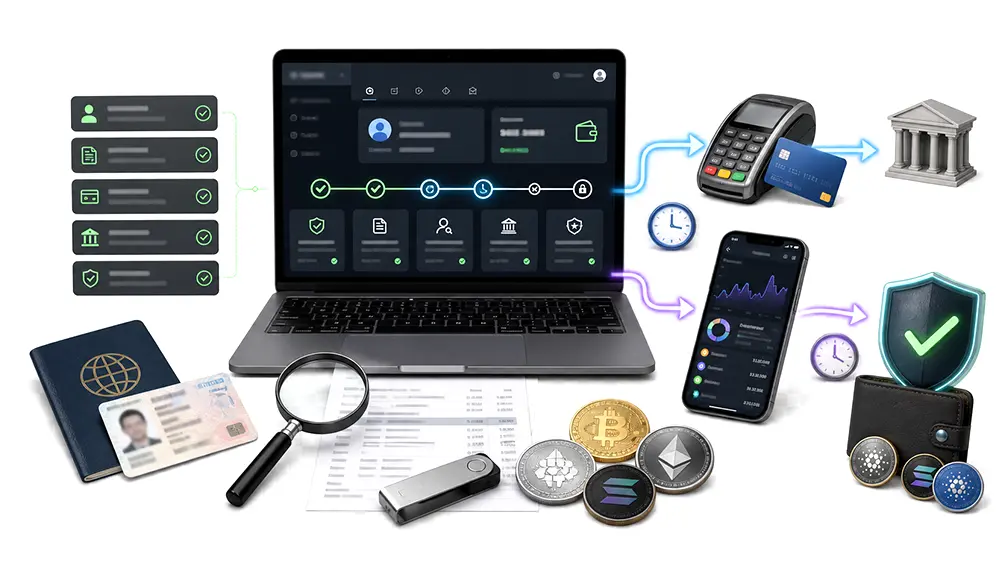
KYC changes the withdrawal clock. A betting site might take a deposit quickly, then pause cashout until customer due diligence, payment ownership, risk checks, and bonus review finish. Card friction often appears through name matching and banking records. Crypto friction appears through wallet control, exchange history, and transaction pattern checks.
| Step number | Card action | Crypto action | Possible delay |
|---|---|---|---|
| 1 | Withdrawal request submitted | Coin payout requested | Pending balance review |
| 2 | Identity profile checked | Identity profile checked | Missing document |
| 3 | Card ownership reviewed | Wallet risk reviewed | Name mismatch |
| 4 | Bonus terms checked | Bonus terms checked | Unfinished wagering |
| 5 | Operator releases funds | Operator sends transfer | Manual approval |
| 6 | Funds reach bank | Funds reach wallet | Issuer or chain processing |
Operators are reminded they must never place commercial considerations over compliance.
Andrew Rhodes, former Chief Executive and Commissioner at the Gambling Commission, UK gambling regulation expert
Identity and address checks
Identity checks prove who owns the betting account. Address checks confirm where the player lives. A passport, driving licence, or national identity document usually covers photo ID. A utility bill, bank statement, or official correspondence often proves residence. Poor image quality, expired files, mismatched names, and old addresses slow approval. A bank statement request often means the operator needs both address and payment evidence.
| Document | Proves | Common triggers | Numeric detail | Delay risk |
|---|---|---|---|---|
| Passport | Valid photo ID | Expired file | 1 clear image | Retake needed |
| Driving licence | Name and age | Old address | 4 mismatch types | Manual check |
| National ID | Identity | Blurred scan | 1 document | Upload rejected |
| Utility bill | Proof of address | Date too old | 3 month recency | Fresh file needed |
| Bank statement | Address and account link | Name mismatch | 1 account | Extra review |
| Official correspondence | Residence evidence | Different address | 1 dated letter | Approval paused |
Common delay reasons
Check these points before requesting a cashout. Clean documents reduce repeat uploads and support faster approval.
- Photo ID has glare, cropped edges, or unreadable text.
- Document expired before the withdrawal date.
- Profile name differs from card, wallet, or exchange records.
- Address evidence shows an old residence.
- Statement file hides required account details.
- Upload format fails or file size exceeds limits.
Source of funds review
Source of funds review checks how a player pays for gambling activity. It covers more than balance. Salary, savings, bank transfers, crypto exchange records, and affordability signals all matter. Crypto users still leave records where an exchange account connects coin purchases to identity. Accurate files help enhanced due diligence finish without repeated questions.
| Evidence type | What it proves | Card relevance | Crypto relevance |
|---|---|---|---|
| Payslip | Regular income | Supports deposit pattern | Supports affordability context |
| Bank statements | Cashflow and bills | 1 to 3 months requested | Shows exchange transfers |
| Savings record | Available funds | Explains larger deposits | Explains coin purchase |
| Exchange account | Coin purchase route | Less direct | 1 exchange account checked |
| Transaction summary | Totals over selected period | Card deposit volume | Wallet movement totals |
Review situations
These examples show where extra checks enter the payout process. They relate to risk controls, not betting skill.
- Deposit volume rises sharply within a short period.
- Withdrawal value looks high against earlier activity.
- Bank transfers show unexplained incoming funds.
- Exchange records do not match wallet movement.
- Stakes or losses raise affordability concerns.
AML screening triggers
Anti-money laundering screening adds review when transaction behaviour looks unusual. Clean details reduce delay because the operator spends less time reconciling names, accounts, devices, and payment routes. A manual review trigger does not prove wrongdoing. It often means the site needs clearer records before releasing funds.
| Trigger | Why it matters | Card example | Crypto example |
|---|---|---|---|
| Rapid in and out | Looks like movement, not play | Repeated same-day transactions | Deposit then immediate cashout |
| Different accounts | Ownership needs proof | 2 payment accounts used | Wallet differs from exchange name |
| Mismatched name | Account link unclear | Cardholder differs | Exchange owner differs |
| Duplicate profile | Bonus abuse or identity risk | 1 duplicate profile found | Shared wallet across accounts |
| Sanctions hit | Legal screening required | 1 sanctions match | Blocked wallet or exchange record |
| High-value cashout | Extra approval needed | Sudden large card payout | Sudden high-value coin transfer |
Withdrawal Route Checker
This tool helps players compare a debit card withdrawal with a crypto payout after KYC. It does not promise an exact payout time. It shows where delays may appear, which costs need checking, and which route looks more practical for your situation.
How the checker works
The tool compares two withdrawal routes after a cashout request. The debit card route is assessed against KYC, account name matching, banking rails, issuer rules, bonus terms and possible fallback bank transfer. The crypto route is assessed against KYC, wallet address accuracy, network selection, transaction hash tracking, exchange off-ramp access and GBP conversion.
The calculation does not use data from a named bookmaker. It helps you spot likely friction before funds reach you. A high score does not guarantee a fast payout. A low score means you should check documents, payment details, bonus rules or crypto settings before you request withdrawal.
What the checker does
The tool shows which payout method better suits your current position. It considers withdrawal amount, KYC status, bonus restrictions, payment ownership, crypto experience, network confidence and your main priority. After calculation, it gives a comparison table, a short recommendation and a pre-withdrawal checklist.
How to use the checker
- Enter the withdrawal amount in pounds. For example, 50, 100 or 1000.
- Select your KYC status. If verification has not finished, both routes may face delays.
- Choose the bonus position. Active wagering or a withdrawal cap may block payout regardless of method.
- Confirm whether your payment details match your profile. Name mismatches often lead to manual review.
- Rate your crypto experience. If wallet address or network selection feels unclear, a card route is usually safer.
- Choose your main priority. For GBP receipt and simple records, a card or bank payout often works better. For blockchain visibility and off-ramp control, crypto may suit experienced users.
- Click the comparison button.
- Read the recommendation and checklist. Complete key checks before requesting withdrawal.
- Save your payout reference, transaction hash, bank record, bonus terms and support messages.
- Do not treat the result as a payout guarantee. The final outcome depends on bookmaker rules, account checks and payment provider processing.
Debit card withdrawals
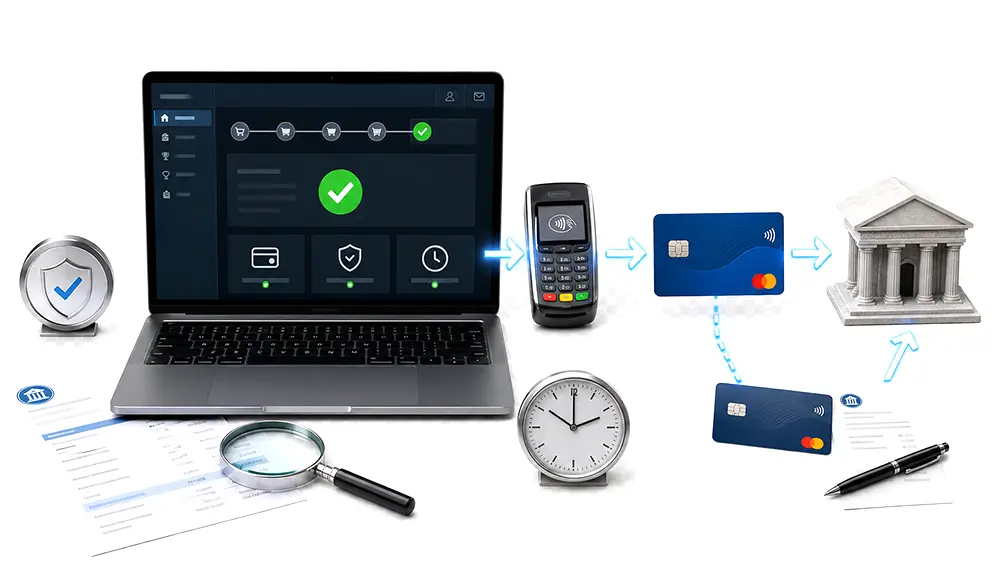
Debit card withdrawals follow a familiar route for UK players. The bookmaker approves the request, then a processor sends funds towards the card issuer or bank account. This suits players who want GBP settlement without wallet setup. The limit is debit card eligibility. Some cards reject gambling payouts, so a banking fallback option matters.
| Stage | Player action | Expected result | Player check |
|---|---|---|---|
| Bookmaker | Request cashout | 1 bookmaker reviews account | KYC complete |
| Processor | Wait for release | 1 processor receives instruction | Reference saved |
| Card issuer | Use deposit card where allowed | 1 card issuer accepts payout | Card active |
| Bank account | Check statement | 1 bank account posts funds | Name matches |
| Fallback route | Provide bank details if required | Alternative transfer arranged | Sort code ready |
How card payouts reach a bank account
A card payout starts inside the betting account after approval. The operator sends an instruction to its payment processor. The processor attaches a payout reference and routes money through the card network or another bank rail. Some bookmakers return funds to the original deposit method where possible, which helps account name matching. Open banking checks also support ownership review before final bank posting.
| Step | What happens | Possible issue |
|---|---|---|
| 1 | Operator approves withdrawal | Pending review remains |
| 2 | Payout reference created | Missing reference slows support |
| 3 | Processor receives instruction | Batch not yet sent |
| 4 | Card or bank rail used | Account name match fails |
| 5 | Final bank posting appears | Issuer rejects credit |
Why card payments still take time
Card payments still involve several approval points. Delay might come from manual withdrawal review, a pending cashout window, processor batching, issuer handling, weekends, bank holidays, or card acceptance rules. The visible withdrawal button does not mean instant release. Players reduce friction by keeping one payment account, matching names, and checking whether the card accepts gambling-related credits.
| Delay source | Who controls it | User action |
|---|---|---|
| Pending window hours | Bookmaker | Check cashier terms |
| Batch cut-off time | Processor | Request earlier where useful |
| Bank holidays | Banking system | Plan around closures |
| Issuer decline reasons | Card issuer | Confirm card support |
| 2 payment accounts | Operator risk team | Use consistent details |
| Document gap | Player and operator | Upload clear files |
When debit cards suit UK players
Debit cards suit players who prefer clear GBP movement, bank statements, and simple budgeting. This route fits users who value familiar finance records more than blockchain settlement speed. It removes exchange sales and wallet management, though a withdrawal reversal window, issuer policy, or failed card credit still needs attention.
| Player need | Why card suits it | Warning |
|---|---|---|
| GBP settlement | No coin conversion needed | Issuer rules still apply |
| 1 UK bank account | Funds land in known place | Name must match |
| 1 cardholder name | Ownership looks cleaner | Shared cards create friction |
| Budget records | Statement shows deposits and payouts | Gambling blocks affect use |
| 0 wallet steps | No address or chain choice | Fallback transfer might be needed |
Crypto payouts
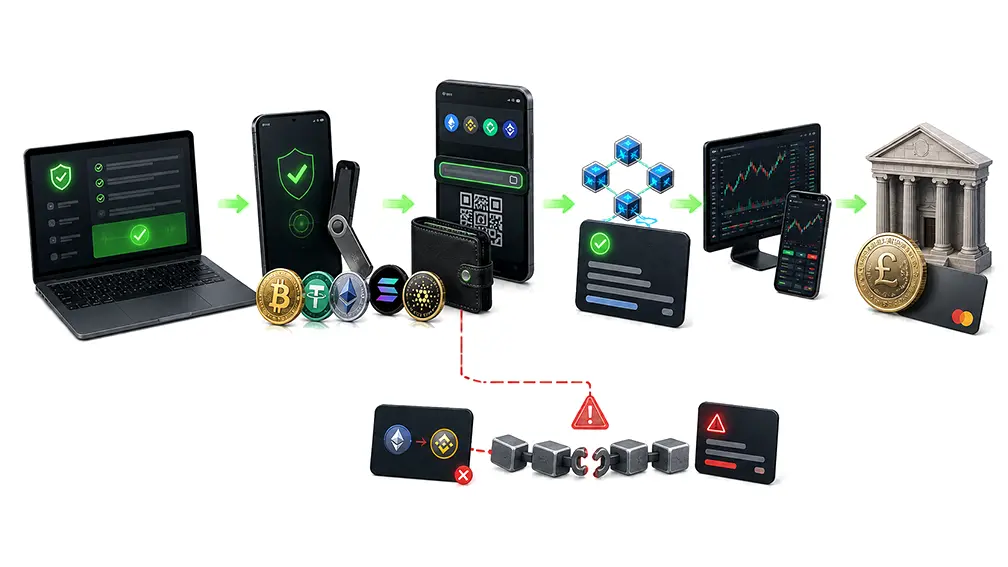
Crypto payouts begin after verification and operator release. The site sends bitcoin, stablecoins, or altcoins to 1 crypto wallet address on the selected chain. The player then tracks the transfer, waits for confirmations, and converts to GBP through an exchange if needed. Process risk sits around wrong addresses, unsupported networks, price movement, and cashout rules.
| Stage | Player action | Expected result | Player check |
|---|---|---|---|
| Wallet | Enter 1 wallet address | Destination saved | Check first and last characters |
| Network | Select 1 network | Chain route set | Match wallet support |
| Confirmation | Wait for blocks | Confirmation count rises | Track status |
| Record | Save transaction hash | Transfer trace exists | Keep reference |
| Off-ramp | Send to exchange | Sell route ready | Use matched network |
| GBP | Convert funds | Bank withdrawal follows | Record sale value |
Bitcoin and stablecoin withdrawals
Bitcoin has wider recognition, but price movement changes the final GBP value before sale. Stablecoins give a steadier balance before conversion, yet they still carry network, exchange, and issuer risks. Both routes depend on operator approval first. Correct wallet details matter as much as the GBP conversion rate after funds leave the betting account.
| Coin type | Speed factor | Value risk | Best use case |
|---|---|---|---|
| BTC | Block confirmation timing | High price movement | Recognised coin transfers |
| USDT | Network selected | Lower market movement | Predictable cashout value |
| USDC | Exchange support | Lower market movement | Dollar-linked accounting |
| LTC | Often quicker than BTC | Price movement remains | Lower-fee transfers |
| BCH | Network capacity | Price movement remains | Alternative coin payout |
Network choice and transaction cost
Network selection affects cost, timing, and recoverability. Bitcoin uses its own chain. Stablecoins move across different networks, and each one has separate fees, confirmation rules, and exchange support. A crypto exchange withdrawal to an unsupported chain or wrong wallet creates severe recovery problems, so the address screen deserves slow attention.
- Match the coin: check the cashier asset name. BTC, USDT, and USDC are not interchangeable.
- Match the network: compare bookmaker and wallet screens. Wrong chain selection risks loss.
- Check exchange support: confirm deposit networks before sending onwards. Unsupported routes delay conversion.
- Review fees: view the final fee before approval. Costs vary by chain demand.
- Save records: keep the hash and payout reference. Support needs both when tracing funds.
When crypto suits betting players
Crypto suits experienced users who already manage wallets, track transfers, and understand conversion steps. It does not create anonymity or automatic safety. The route fits players who value visible transaction records and accept exchange off-ramp delay, address risk, and extra record-keeping.
| Player need | Why card suits it | Warning |
|---|---|---|
| 1 secure wallet | Player controls receipt | Private key risk remains |
| 1 exchange account | GBP sale route exists | Exchange checks still apply |
| 1 network check | Transfer route is clear | Wrong chain risks loss |
| 1 transaction hash | Status stays visible | Visibility does not equal approval |
| 1 GBP conversion step | Value becomes spendable | Spread reduces final return |
Card versus crypto payment examples
Payment choice depends on amount, KYC status, bonus rules, history, and wallet skill. A payout audit trail matters because the player needs a clear record when support reviews delay, limit, or payment ownership issues. These examples use sample figures only, not brand results.
| Scenario | Example amount | Card outcome | Crypto outcome | Key check |
|---|---|---|---|---|
| Small verified cashout | £50 | Simple GBP return | Fast after release | KYC complete |
| Larger withdrawal | £1,000 | Possible manual review | Possible wallet and funds review | Account history |
| Bonus cashout | £100 | Terms decide release | Terms decide release | Wagering status |
Small withdrawal after full KYC
A £50 withdrawal after full KYC usually has fewer friction points. The card route looks simpler when the same bank-linked payment method has funded the account. A crypto payout might move faster after approval, but the player carries address responsibility and must save the transaction reference code.
| Step | Card route | Crypto route | Number |
|---|---|---|---|
| Profile | Account already approved | Account already approved | 1 verified profile |
| Amount | GBP cashout requested | Coin cashout requested | £50 |
| Record | Payout reference saved | Hash or reference saved | 1 payout reference |
| Destination | Known card or bank | Wallet destination entered | 1 wallet address |
Larger payout with extra checks
A £1,000 request can face closer review even after standard verification. The operator might request source of funds, split the withdrawal, apply daily or weekly caps, or hold funds for document checks. Card users see banking and issuer friction. Crypto users see wallet, exchange, and chain-route review. A manual review trigger changes timing for both.
| Issue | Card impact | Crypto impact |
|---|---|---|
| £1,000 amount | Higher value review | Higher wallet risk review |
| Daily cap | Payment split possible | Coin transfer split possible |
| Weekly cap | Remainder waits | Remainder waits |
| Document count | ID, address, bank file | ID, address, exchange file |
| Review flag | Issuer and operator checks | Operator and wallet checks |
Bonus cashout with payment restrictions
Bonus rules decide release before payment method matters. A debit card will not bypass wagering, expiry, maximum bet breaches, restricted play, or capped winnings. Crypto works the same way. The main timing issue is pending balance release after the operator confirms every promotion condition.
| Rule | Example number | Card impact | Crypto impact | Payout consequence |
|---|---|---|---|---|
| Wagering | 30x | Funds stay pending | Funds stay pending | No release until complete |
| Maximum bet | £5 | Breach risks voiding | Breach risks voiding | Winnings reduced or removed |
| Expiry | 7 day expiry | Late play fails | Late play fails | Bonus balance removed |
| Cashout cap | £100 cap | Card payout limited | Coin payout limited | Excess removed |
| Restricted bets | 0 eligible restricted bets | Terms block release | Terms block release | Manual review likely |
| Payment eligibility | 1 check | Card must qualify | Wallet route must qualify | Fallback route possible |
Security risks for both payout routes
Security risk changes by route. Card withdrawals give more banking structure, yet they bring issuer declines, account matching, monitoring, freezes, and chargeback exposure difference. Crypto payouts give clearer transfer visibility, yet errors are final. Players should verify account names, save references, use secure logins, and check every destination before approval.
| Risk | Card route | Crypto route | Prevention step |
|---|---|---|---|
| Destination error | Wrong bank details delay payment | Wrong address risks permanent loss | Check account or wallet destination accuracy |
| Name mismatch | Cardholder differs from profile | Exchange owner differs from profile | Use matching personal details |
| Issuer or exchange block | Bank rejects gambling credit | Exchange delays receipt or sale | Confirm route support first |
| Account freeze | Bank monitors unusual activity | Exchange flags unclear funds | Keep clear transaction records |
| Access compromise | Stolen login redirects payout | Wallet seed theft drains funds | Use 2FA and secure storage |
| Poor records | Missing payout reference slows tracing | Missing hash weakens support case | Save every reference immediately |
Bonus rules linked to payment choice
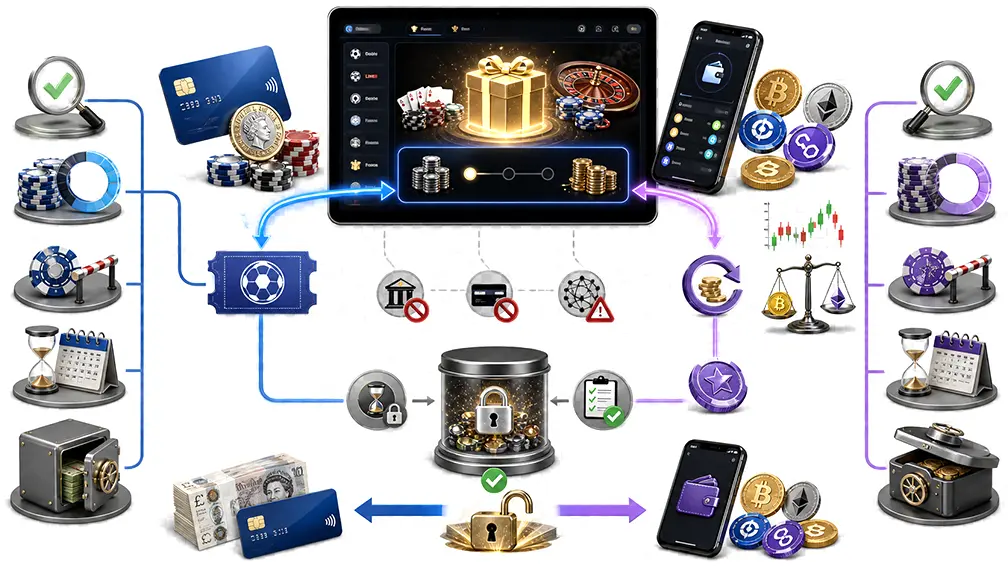
Bonus eligibility should be checked before depositing, not after winning. Betting offers and casino promotions sometimes treat payment routes differently. Some exclude certain funding methods, some create separate coin terms, and some apply caps after bonus play. The operator payment policy should explain eligibility, wagering, expiry, and cashout limits in one place.
| Bonus issue | Card-funded offer | Crypto-funded offer | What to check |
|---|---|---|---|
| Wagering multiplier | Shown in GBP terms | Shown in coin or token terms | Exact multiplier before claim |
| Maximum bet | Stake cap applies during wagering | Coin stake cap applies during wagering | Maximum allowed stake |
| Expiry days | Offer ends after set period | Coin bonus ends after set period | Number of days |
| Withdrawal cap | Cashout might be limited | Coin cashout might be capped | Maximum return |
| Excluded method count | Some routes might not qualify | Some networks might not qualify | Excluded methods total |
Card eligible bonuses versus crypto casino bonuses
Card-funded bonuses usually use GBP values, free bet credits, and familiar wagering conditions. Crypto casino bonuses often use coin balances, token rewards, cashback, or network-specific rules. Stablecoin value certainty helps reduce price movement before conversion, but bonus caps, expiry, and eligibility still decide final payout value.
| Bonus type | Card format | Crypto format | Bonus values and key terms | Payout issue |
|---|---|---|---|---|
| Free bet | GBP stake credit | Coin equivalent credit | Free bet value, expiry, odds rules | Stake return rules differ |
| Deposit match | Percentage of card deposit | Percentage of coin deposit | Coin value and wagering | Conversion affects display value |
| Cashback | GBP loss return | Coin or stablecoin return | Cashback percentage | Withdrawal terms vary |
| Token reward | Rare on UK card offers | Reward token balance | Token reward terms | Value changes before sale |
| Cashout cap | GBP maximum return | Coin maximum withdrawal cap | Cap, expiry, wagering status | Excess winnings removed |
Wagering rules, maximum bet limits and withdrawal caps after a bonus
Bonus maths affects withdrawals before any payment route matters. A £100 bonus with 30x wagering creates a £3,000 wagering target. If the maximum stake is £5, any larger qualifying attempt risks breach review. Expiry, excluded markets, withdrawal caps, and account restrictions also affect release. These figures are placeholders, not brand terms.
| Rule | Why it matters | Payout impact |
|---|---|---|
| 30x wagering | Sets total turnover needed | Funds stay locked until complete |
| £100 bonus | Creates £3,000 wagering target | Progress must be tracked |
| £5 max bet | Limits stake size during wagering | Higher stakes risk voiding |
| 7 day expiry | Sets claim deadline | Late completion fails |
| £100 cap | Limits withdrawable winnings | Excess balance removed |
| 0 restricted market use | Keeps bonus activity eligible | Restricted play risks cancellation |
Best practical use cases for card withdrawals and crypto payouts
No payout route wins every case. Debit cards suit UK players who want GBP banking, clear records, and fewer technical steps. Crypto suits experienced users who manage wallets, track transfers, and control off-ramp timing. A banking fallback option matters when card credits fail or bookmaker rules require bank transfer instead.
| Player need | Better route | Reason |
|---|---|---|
| Simple GBP receipt | Debit card | Funds return to familiar banking records |
| Fewer technical steps | Debit card | No wallet, chain, or exchange needed |
| Visible transfer record | Crypto | Hash tracking shows chain progress |
| Bank budgeting | Debit card | Statements show deposits and payouts |
| Off-ramp control | Crypto | User chooses conversion timing |
| Low error tolerance | Debit card | Wrong wallet details create higher loss risk |
Best for simple GBP withdrawals to a UK bank account
Debit cards or bank payouts suit players who prefer a fiat payout rail, no wallet setup, and clearer personal records. The route works best when verification has passed, card details match the account, and no bonus restriction blocks release.
- 1 currency: GBP settlement removes coin conversion from the process.
- 1 name match: cardholder, betting profile, and bank data should align.
- 0 wallet steps: no seed phrase, chain choice, or address paste is needed.
- 1 statement trail: banking records support budgeting and dispute checks.
- 1 fallback route: bank transfer gives another option when card credit fails.
Best for faster settlement at crypto betting sites
Crypto payouts work best after operator approval when the player already understands wallets, networks, and exchange sales. The benefit comes from blockchain settlement speed and visible transfer records. The trade-off is address risk, network selection, and possible conversion delay after funds reach an exchange.
- 1 correct wallet: accurate destination details reduce failed transfer risk.
- 1 network match: bookmaker, wallet, and exchange must support the same chain.
- 1 stablecoin option: token value tracks fiat more closely before sale.
- 1 hash record: transfer status stays visible after release.
- 1 exchange step: GBP conversion still needs a supported off-ramp.
Best for sports betting players who value payment control
Payment control means choosing storage, conversion timing, withdrawal route, and bankroll separation. This suits experienced bettors using several sites for live betting, football, seasonal US sport, or specialist markets. It still needs strict limits because exchange off-ramp delay and easy transfers do not reduce betting risk.
| Betting use case | Card strength | Crypto strength | Number to record |
|---|---|---|---|
| Live betting | Clear bank trail | Visible transfer status | 1 cashout reference |
| Football | GBP bankroll records | Wallet separation | 1 weekly limit |
| NFL | Season budget control | Flexible off-ramp timing | 1 season total |
| Baseball | Frequent statement tracking | Separate coin balance | 1 monthly cap |
| Snooker | Simple payout route | Traceable withdrawal hash | 1 transaction record |
| Motorsports | Event-based spending view | Wallet-based bankroll split | 1 event budget |
FAQ about crypto betting sites and debit cards bookies
Are crypto casinos legal in the UK?
UK players should separate personal access from operator licensing. UKGC-licensed sites offer the strongest local protection. Offshore crypto brands do not give the same complaint route, verification standard, or safer gambling cover.
Do UK crypto casinos pay out real money?
Yes, coins have market value and sell for GBP through exchanges. The payout still depends on account approval, bonus rules, wallet accuracy, and exchange withdrawal checks.
What is the best crypto casino for UK players right now?
No single brand suits every player. A stronger choice shows clear licence details, published withdrawal terms, responsible gambling tools, visible payment rules, and fair bonus conditions.
Can I use Bitcoin at UK casinos?
Some operators support Bitcoin deposits and withdrawals. The player must use the right wallet address, wait for confirmations, then convert funds to GBP if bank spending is needed.
Are there no KYC crypto casinos in the UK?
No KYC claims need caution. Offshore operators still request documents before payout when risk, amount, location, or customer due diligence rules require checks.
Is Bitcoin gambling safe?
Bitcoin removes card sharing risk, but it adds address error, wallet theft, price movement, and final-transfer risk. Safer gambling limits still matter.
Are fees applied to crypto withdrawals?
Network fees, exchange spreads, and GBP conversion costs might reduce the final amount. Debit card routes look simpler, yet issuer rules still affect receipt.
Are crypto payouts faster than debit cards after KYC?
Sometimes. Crypto settlement might move faster after release, but operator approval comes first. Cards rely on banking rails, issuer acceptance, and final posting.
Can debit card withdrawals fail?
Yes. A payout might fail when the card is expired, unsupported, mismatched, blocked by issuer policy, or no longer eligible for gambling credits.
What records should players keep?
Keep payout references, wallet addresses, transaction hashes, exchange sale values, bank statement entries, bonus terms, and support messages. These records help with disputes and personal finance checks.
More resourses
- Gambling Commission, Statistics on gambling participation;
- Gambling Commission, Financial vulnerability check;
- Gambling Commission, Self-exclusion;
- GambleAware, Gambling blocking and self-exclusion;
- HMRC, Cryptoassets Manual;
- Wikipedia, Bitcoin;
- Wikipedia, Online gambling;
- Reddit, KYC discussion on gambling sites.